Programme Onchocercoses
  • IntroductionIntroduction Programme Onchocercoses is funded by the Deutsche Forschungsgemeinschaft (German Research Fund). Our research network is based on more than 30 years of successful partnership of research institutes in Germany and our partners based in Cameroon. Onchocerciasis is also known as river blindness because the blackfly which transmits the disease breeds in rivers; it often blinds people, as well as causing debilitating skin disease. Over 37 million people have been infected (source WHO), often affecting those living in poor, rural African communities. There is currently no official data about the levels of blindness in Cameroon, but it is estimated that about 1% of the population are blind (Sightsavers International), with the principal causes being cataract, river blindness, corneal scarring and refractive error. Ivermectin-mass treatments have been used to cure onchocerciasis and has been available for the past 15-20 years to the villages in our study area. As the life-expectancy of adult Onchocerca volvulus is about 10 to 15 years, it is expected that the endemicity of human onchocerciasis has now dropped to lower levels of endemicity. Planned projects Successful control of human onchocerciasis by mass-distribution of ivermectin (APOC) depends largely of two factors: The implication of additional control measures –…
    • Teaching
    • History of Programme Onchocercoses
    • Partners DFG II: COBE 2013-
    • Partners DFG I: Secretome 2000-2013
    • Gallery
      • Cameroon Excursion 2014
      • DFG Conferences
      • Simulium Fly Traps
      • Cattle Work
      • Breeding Sites
      • Fly Work
    • Contact
  • Projects
    • Current Project
    • Past Projects
  • Life cycledesign by P. Wenk & A. Renz Crosstransmission of animal and human onchocercoses (A. Renz)
    • Life cycle
    • Microfilaria
    • L1-L2-L3 in the vector
    • L4 and adult worms
  • Epidemiology and control
    • Epidemiology and control
    • Human Onchocerciasis
    • Bovine onchocercoses
    • Riverblindness in Cameroon
    • Fly Catching Sites and Data
    • Cross transmission
    • Control
      • Chemotherapy
      • Vaccination
      • Zooprophylaxis
      • Vector Control
  • Simulium vectorsSimulium damnosum s.l. is the main vector of human onchocerciasis in Cameroon and is also the main local vector of Onchocerca ochengi. There are at least 4 main (sub-)species found in the rain-forest and savanna: Simulium sirbanum: A small and very pale species, only found in the Sudan savanna. Simulium damnosum sensu stricto: Savanna mainly, but now also found since 1986 in the forest near Kumba Simulium squamosum: Forest and Guinee-savanna. There are probably several subspecies of S. suamosum; very dark ones in the forest and pale ones in the savana. Simulium mengense: Forest only, but occasionally also observed in the savanna These species can be distinguished by their morphology (see figure), as they come in the adult stage to bite on man. More precisely, identification can be done on the salivary gland chromosomes (“cytotaxonomy”). We examined over 100 Simulium breeding sites in varius bioclimatic zones of Camerroon. The results of the cytotaxonomic identification of the larvae found is given here. Other Simulium flies, like S. bovis, S. dukei, S. griseicolle, S. adersi etc. are occasinally caught on man. Filarial larvae are found in S. bovis (vector of O. ramachandrini, O. ochengi and possibly also O. volvulus) and S. griseicolle (filarial species not yet identified)  
    • Simulium vectors
    • Simulium Fly-Traps (“Magic Flyboy”)
    • Simulium breedings sites
  • Filarial SpeciesWhilst Onchocerca volvulus, the human parasite that causes riverblindness, is commonly known, there is a large number of nun-human Onchocerca and other filarial species found in cattle, game animals and birds. Their infective larvae are encountered in bloodfeeding vectors and must be distinguished from the of human filarial species. Furthermore, some infective larvae of non-human species may occasionally develop in the human host and cause ‘zoonotic filariasis/onchocerciasis’ In the following, Onchocerca species of catte and other filarial species found in Cameroon, shall be presented: Filarial species found in Zebu cattle in Cameroon: …. under construction…. Onchocerca ochengi Onchocerca dukei Onchocerca gutturosa Onchocerca armillata Setaria spec. Dipetalonema spec.   Filarial species found in game animals: Onchocerca ramachandrini BAIN WAHL & RENZ 1993 (warthog) – Simulium damnosum s.l. Onchocerca hamoni (reedbok) – vector ?? Onchocerca ochengi (substrain?) (hartebeest) – vector Simulium damnosum s.l. Robertdollfusidae (new species) – only mff found in Simulium damnosum s.l. (Bain, O. & A. Renz, 1993) Filarial species found in birds:
    • Filarial Species
    • in humans
    • Filarial Species in Cattle
    • in wild animals
  • Bovine O. ochengi model
    • The bovine O. ochengi model
    • Vectors and Transmission
    • Biology of O. ochengi
    • Search for Macro-filaricidal drugs
    • Immunology
  • Oncholab
    • Introduction
    • Entomology
    • Parasitology
    • In-vitro laboratory
    • Molecular Biology
  • NewsAlbert Eisenbarth – Seminar at the LS Vergleichende Zoologie in Tübingen: “Charakterisierung der Filarien des Zebu-Rindes in Zentralafrika, sowie deren Vektoren mittels morphologischer, genetischer und epizootiologischer Analyse” Donnerstag, den 14. Oktober 9.15 – 10.00 Uhr, Raum E3A07, E-Bau, Morgenstelle
    • News
    • Activities, Donations & Grants
    • Press Releases
  • Publications
  • Click to open the search input field Click to open the search input field Search
  • Menu Menu

History of Cameroon

You are here: Home1 / Introduction to Programme Onchocercoses2 / History of Cameroon


Traces of human settlements in Central Africa date back to the very early human history. The skull of the Sahelanthropus tchadensis (5 million years b.C.) was found 2002 in an area North of Lac Tchad. Findings of palaeolithic and neolithic settlements in North Cameroon indicate, that this fertile land in the Lac Tchad bassin has been inhabited for at least 20.000 years.

A detailed description of the history can be found at (LINK). Here we present some of our own impressions and findings:

Prehistory

Little is know yet about the long period of the palaeolithic age, and only a few traces have been discovered yet: On the hill behind the slaughterhous in Maroua, and near Mayo Lidi in the Boubandiddah National Parc there were palaeolithic settlements:

(photo Faustkeil)

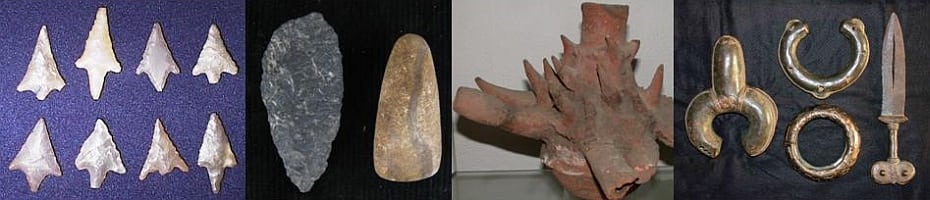
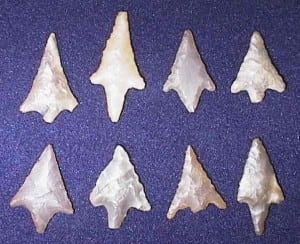
In the neolithicum (8000 -to 2000 b.C.), the sahara was not as hostile as now and flint-stone tools are abundant:
During our chemotheraopy trials (“Macrofil”) on the Ranch Amao near Galim, I found a stone axle right at the corral: (photo stone-axle)

Pre-colonial times

Artefacts from the Nok (Northern Nigeria) and Sao (North-Cameroon and Tchad) cultures are found in the savanna South of Lac Tchad.
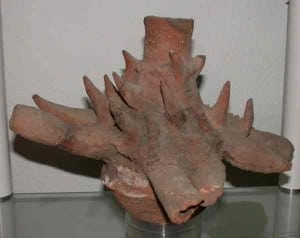
ancient pottery from North Cameroon

ancient pottery from North Cameroon

A magic pottery from North Cameroon. Its many openings let the spirits move in (and out) freely, I have been told.


German colony

In Bouea, where was the German Government stayed until its move to Yaounde, two monuments are particularly interesting:

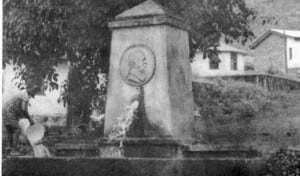
The  Puttkamer ‘castle’ and the Bismark fountain:
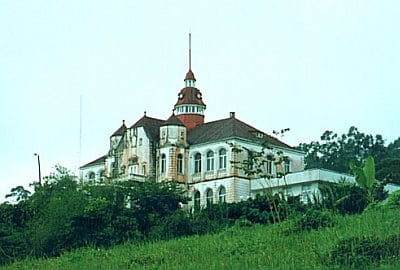
 

Puttkamer castle in Buea
Puttkamer castle in Buea


Bismark fountain in Buea (ca. 1930)


Jesko von Puttkamer was accused for his luxurious way of life, and the chancellor von Bismark never was very much in favour of Germany colonialist adventures.


There were vivid discussions in the Deutschen Reichstag in Berlin, for example about the construction of the New Port of Douala in March 1914:
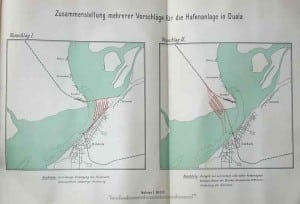


Duala-Hafen – 1914: suggestions for construction No 1
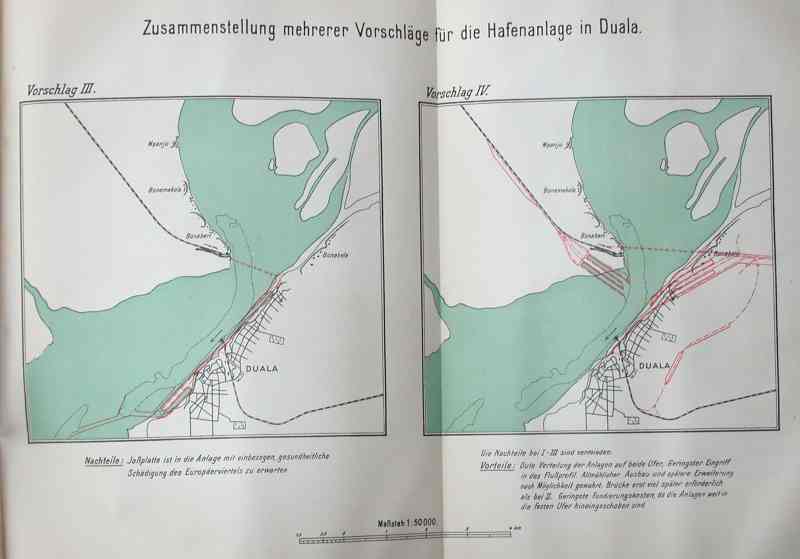
 

Duala-Hafen – 1914: suggestions for construction No 2

Advantages and disadvantages of the four suggestions were discussed, but only a few months later, the outbreak of  WW I abolished all planning. Yet it is interesting to compare these original plans with the nowadays situation. 

With view to the endemicity of human onchocerciasis, the first map of the river Moungo near Kumba already shows the same location of villages as nowadays, and the number of inhabitants did not change much until now.
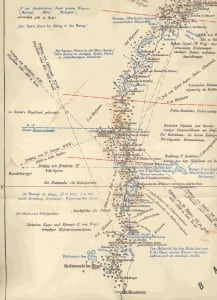
map of Bolo (near Kumba, Moungo river) in 1902


There seems to have been only little growth in the population denisty for almost 100 years. Major events were the settlements of ‘slave villages’, funded by homeless former slaves soon after colonization.

Bolo (Bulu in the map) nowadays (Google Earth, 2011)
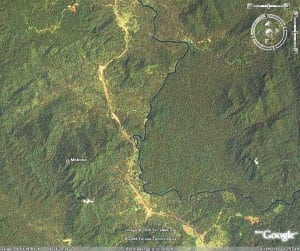
 

Bolo today (Google-Earth, 2011)


Human onchocercasis in Bolo has been described by Duke et al. 1968 and Jacobi et al. 2010.
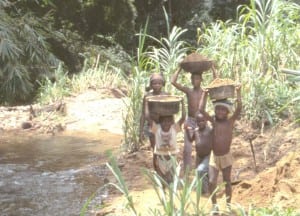
Bolo-children-Jacobi-Renz-Fig-3

Bolo-children-Jacobi-Renz-Fig-3


There are still many building from the Germay time to be seen in Douala, Buea, Limbe and other places. German colonial days when the last troops gave up or moved in Equatorial Guinea. In the mountains near Banjo, objects from the last stand of German troops were found:
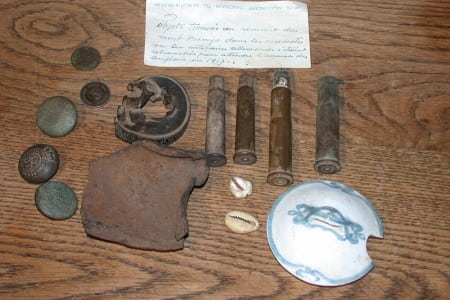
 

German objects from the Banjo mountain

German coins, gun bullets, decorative knobs from uniforms and the cover of a sugar box were found in a cave on the mountain, were parts of the Schutztruppe had retired (objects found by Mr. West-Bauer, Ngaoundéré).

French and British mandats of Cameroon

The former German colony was set by the Völkerbund under a British and French mandate. One small part (Yola) went to Nigeria, but the anglophone Western part and the larger French part decided, by public vote, to form the ‘Republic of Cameroon’ in 1961 and, and, after independence,  the ‘United Republic of Cameroon’ in 1972.

Recent history

Our own work allowed us to get an  impression of the more recent history of a very particular site in the Sudan savanna, the Campement du Syrien on the banc of river Vina du Nord near Sora Mboum. This were we set up our field laboratory to study the Simulium damnosum s.l. populations along the river Vina du Nord.
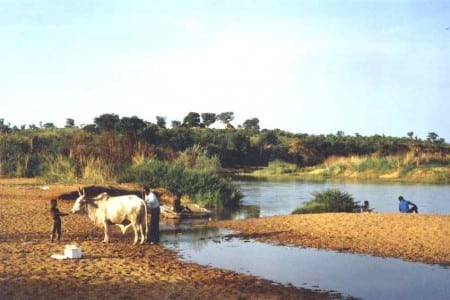


Campement du Syrien at river Vina du Nord

Entomology laboratory in the boucarou of the Campement in 1988

In 1985 we took over this settlemet of a few houses constructed in ‘semi-dur’ and transformed it into our field base for entomological studies in Vina du Nord river valley, hyperendemic for human onchocerciasis.


The place is called ‘Campement to Syrien’ to remember a Syrien merchant, who settled at this place around the years 1920. He wanted to trade, but finaly was killed during the revolt of the Mboum tribe against the local Foulbe Lamido (Sultan). His grave is still there on a hill close the river. A few laterit stones, laid in form of a cross, which we tried to maintain.
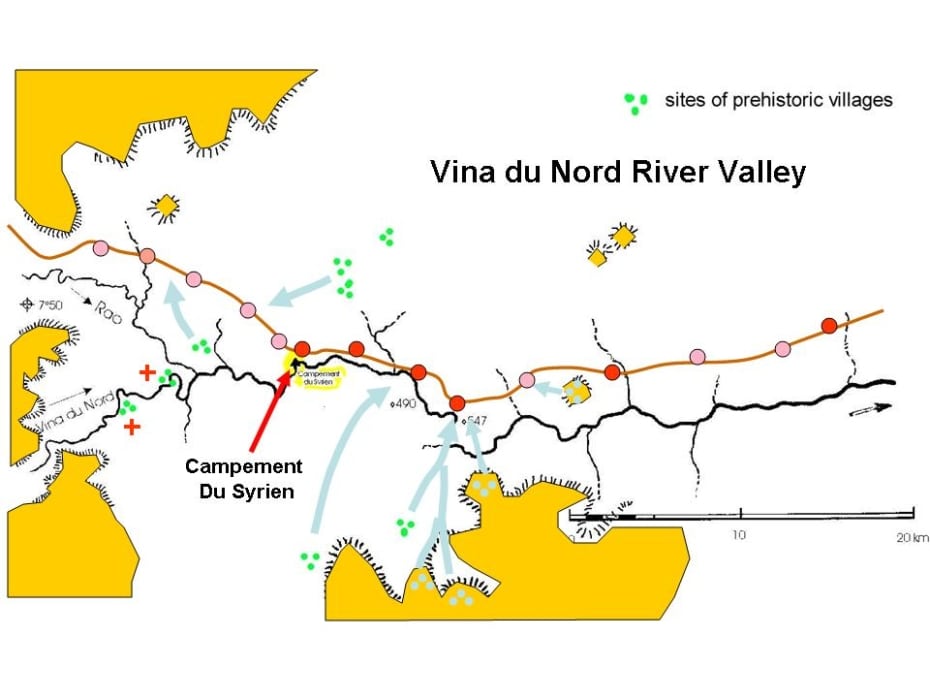
Prehistoric human settlements in the Vina du North valley


The villages, at that time, we located in strategic positions of the top of the hills and mountains. Most of them far away from the river and swamps, and thereby protected from the risc of onchocerciasis, schistosomiasis and malaria. Only when they moved to their new settlements along a new-build road along the river, some of these new settlements came dangerously close to the water.
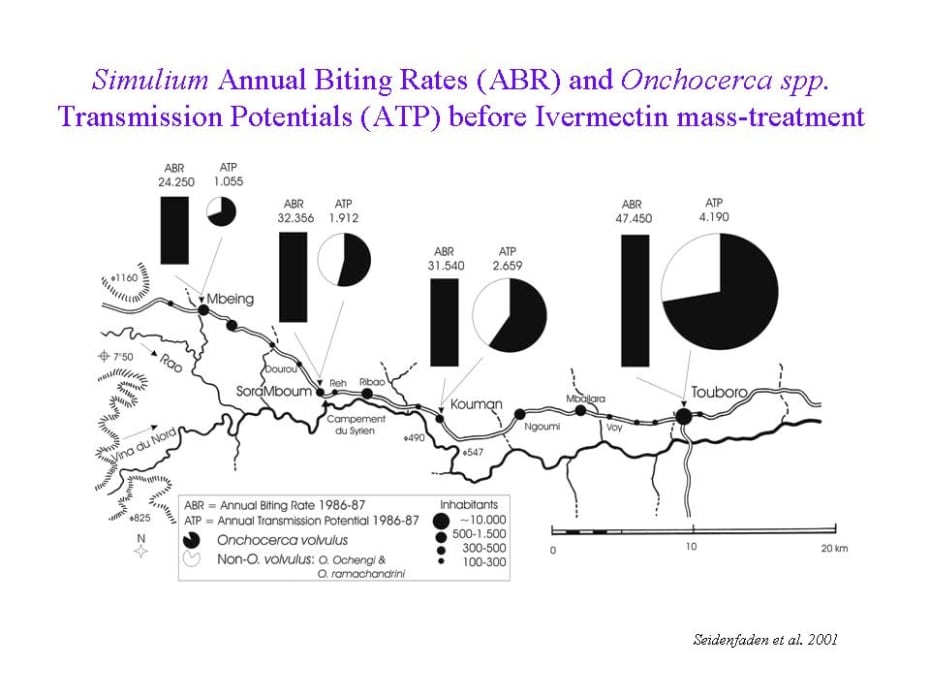
Epidemiology of onchocerciasis along the river Vina du Nord in 1987 (A. Renz)



0 replies

Leave a Reply

Want to join the discussion?
Feel free to contribute!

Leave a Reply Cancel reply

You must be logged in to post a comment.

This site uses Akismet to reduce spam. Learn how your comment data is processed.

  • History of Cameroon
  • History of Programme Onchocercoses
  • Partners DFG II: COBE 2013-
  • Teaching
    • Organismische Parasitologie (Univ. Tübingen, WS)
  • Partners DFG I: Secretome 2000-2013
  • Gallery
    • Breeding Sites
    • Cameroon Excursion 2014
    • Cattle Work
    • DFG Conferences
    • Fly Work
    • Simulium Fly Traps
  • Contact
    • Press Releases

Recent News

  • Afrika-Festival 2018 in Tübingen
  • Congress of the German Society for Parasitology in Berlin March 2018
  • Sevidzem Lendzele and Archile Paguem back in Tübingen
  • Dies universitatis WS 2017/18
  • Congratulation to Sevidzem Lendzele!
University of Tuebingen

University Tuebingen

Insitute of Evolotion and Ecology

Deutsch
English

Search

Search Search

Categories

  • Donations
  • News
  • Our Project and the Community
  • Press Release
  • Project Partners
  • Uncategorized
© Copyright 1979-2026 Programme Onchocercoses, Dr Alfons Renz - All rights reserved.
  • Legal DisclaimerLegal Disclaimer This website is designed for information purposes only. Whilst every effort has been made to provide accurate and up to date information, it is recommended that you consult us before taking or refraining from taking action based on matters discussed. We accept no liability for any loss suffered as a result of your use of this website or reliance on any information provided on it. The website contains links to websites operated by third parties over whom Programme Onchocercoses has no control. These are provided for your convenience only. We therefore make no warranties or representations as to the accuracy or completeness of any of the information appearing neither in relation to any linked websites or documents nor as to the suitability or quality of any of their products or services. Copyright is reserved to Programme Onchocercoses and to its associated partners (as listed in the partners page) and this material may not be circulated, reproduced or published in whole or in part without written consent of Programme Onchocercoses. You may print articles or material or download them to a local hard disk for your own personal use or use by others within your organisation. You may also…
  • Privacy PolicyProgramme Onchocercoses (“riverblindness.de”, “riverblindness.eu or “we”) are strongly committed to privacy issues, and this privacy statement details our approach on such issues. By using this site and submitting any personal data, you agree to the use by Programme Onchocercoses of such data in accordance with this privacy statement. If you have questions on privacy issues, please email us at info@riverblindness.eu Data collection We only collect identifiable personal data or information that is specifically and voluntarily provided by a visitor to our site. For example, a visitor to our site may choose to provide information such as name, title, office address, office email address and telephone number in order to: ▪ register for certain areas of the site; ▪ contact us for further information; ▪ participate in “join our mailing list” initiatives Visitors are also able to send email to us through the site. Their messages will contain the user’s contact name and email address, as well as any additional information the user may wish to include in the message. Use of data When a visitor provides personal data to us, we use it solely for the purposes for which it was provided to us as stated at the point of…
Scroll to top Scroll to top Scroll to top

This site uses cookies. By continuing to browse the site, you are agreeing to our use of cookies.

OK××

Cookie and Privacy Settings


How we use cookies

We may request cookies to be set on your device. We use cookies to let us know when you visit our websites, how you interact with us, to enrich your user experience, and to customize your relationship with our website.

Click on the different category headings to find out more. You can also change some of your preferences. Note that blocking some types of cookies may impact your experience on our websites and the services we are able to offer.

Essential Website Cookies

These cookies are strictly necessary to provide you with services available through our website and to use some of its features.

Because these cookies are strictly necessary to deliver the website, refusing them will have impact how our site functions. You always can block or delete cookies by changing your browser settings and force blocking all cookies on this website. But this will always prompt you to accept/refuse cookies when revisiting our site.

We fully respect if you want to refuse cookies but to avoid asking you again and again kindly allow us to store a cookie for that. You are free to opt out any time or opt in for other cookies to get a better experience. If you refuse cookies we will remove all set cookies in our domain.

We provide you with a list of stored cookies on your computer in our domain so you can check what we stored. Due to security reasons we are not able to show or modify cookies from other domains. You can check these in your browser security settings.

Google Analytics Cookies

These cookies collect information that is used either in aggregate form to help us understand how our website is being used or how effective our marketing campaigns are, or to help us customize our website and application for you in order to enhance your experience.

If you do not want that we track your visit to our site you can disable tracking in your browser here:

Other external services

We also use different external services like Google Webfonts, Google Maps, and external Video providers. Since these providers may collect personal data like your IP address we allow you to block them here. Please be aware that this might heavily reduce the functionality and appearance of our site. Changes will take effect once you reload the page.

Google Webfont Settings:

Google Map Settings:

Google reCaptcha Settings:

Vimeo and Youtube video embeds:

Other cookies

The following cookies are also needed - You can choose if you want to allow them:

Accept settingsHide notification only